
Introduction To The Hip
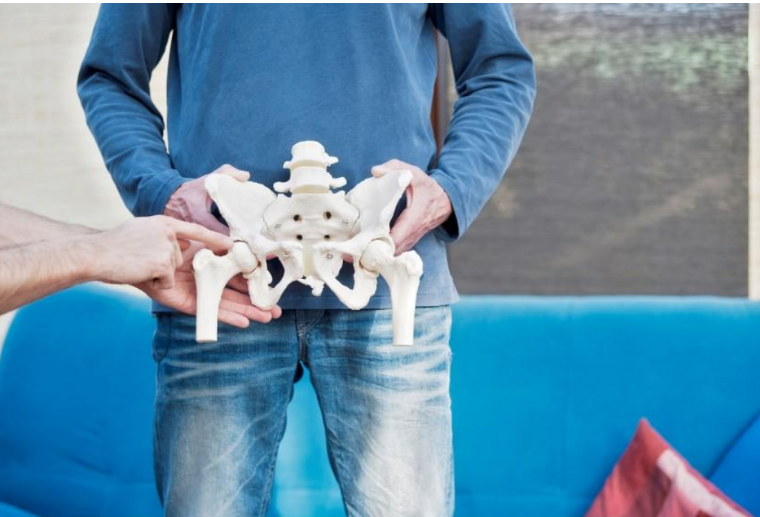

– The hip joint is a ball and socket joint that connects the leg to your pelvis. – The head of the femur is the “ball” and the acetabulum is the “socket”. – Ligaments around the hip joint help to make the joint more stable.
– The 3 main ligaments are the iliofemoral, pubofemoral and ischiofemoral ligaments
– There are several muscles responsible for movement of the hip in different directions – Flexion: iliopsoas, rectus femoris, sartorius, pectineus, tensor fascia latae – Extension – gluteus maximus, and hamstring
– Abduction – gluteus medius, gluteus minimus, tensor fascia latae
– Adduction – adductor longus, brevis, and magnus; pectineus, gracilis – External rotation – gluteus maximus, piriformis, quadratus femoris, obturators, gemilli and quadratus femoris
– Internal rotation – anterior fibers of gluteus medius and minimus, tensor fascia latae, piriformis (when the hip is flexed past 90 degrees)
– Did you know?
– The quadricep muscle is made up of 4 muscles (that’s why it’s called the quadricep). Those muscles are the rectus femoris, vastus lateralis, vastus medialis, vastus intermedius.
– The hamstring is made up of 3 muscles. Those muscles are the biceps femoris, semitendinosus, semimembranosus.
For more on information, reach out to ProTailored Physical Therapy or call us at (260)739-0300.