
All About Gluteus Medius
Overview
Do you suffer from recurring hip or back pain? Do you have a difficult time standing for long periods of time or walking long distances? This could be due to numerous reasons, however we are highlighting one area today that is often overlooked. Your gluteal muscles are important muscles that aid in walking, squatting, and lifting activities. This article aims to highlight the importance of your gluteus medius.
Your gluteus medius is a muscle in the buttock that attaches from the posterior and lateral aspect of the hip down to the top of your thigh bone. Its main responsibility is to stabilize the pelvis, specifically with walking and running, and helps to maintain an upright trunk. If this muscle is weak, it can affect a person’s balance and stability potentially leading to injuries such as IT band syndrome, patellofemoral pain syndrome, knee injuries, and lower back pain.
The good news is that you can strengthen this muscle to prevent injuries, improve running or walking mechanics as well as make lifestyle changes to improve the gluteus medius ability to contract strongly. Below are lifestyle recommendations and research based exercises to improve the function of this gluteal muscle.
Lifestyle Recommendation
- When standing for a long period of time, avoid shifting weight into one leg and swaying your pelvis sideways
- Sleep with a pillow in between your legs/knees
- Avoid sitting crossed legged for long periods of time
Exercise Recommendations
General Exercise Recommendations: Perform 2-3 sets of 10 repetitions for each exercise. Exercise progressions should only be performed after pain free mastery of the beginning exercises. Allow for 24-48 hours of rest between days of exercise.
Beginner Exercises with Progressions
- Glute Squeeze:
- Can perform in sitting or standing, squeeze buttocks together tightly and hold for 3 seconds before releasing.
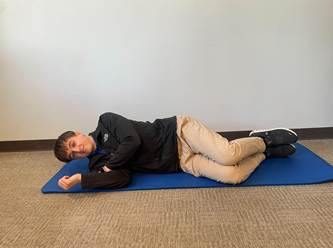
- Clamshell (with progression)
- Position 1: Start in sidelying with hips bent slightly and feet together. Rotate the top knee upwards while keeping feet together. Hold this position briefly and the lower back to the starting position.
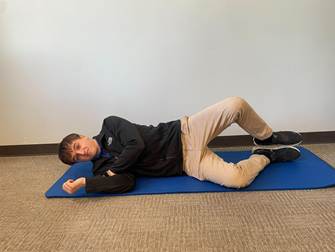
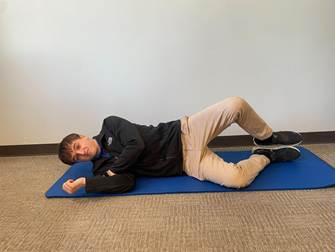
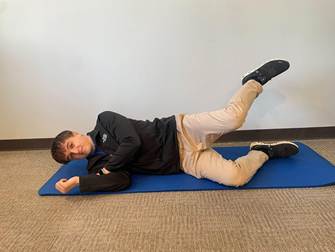
- Progression: start in sidelying with hips slightly bent and feet together. Raise the knee to be parallel to the ground. Internally rotate your top hip by bringing your foot towards the ceiling and then returning to neutral.
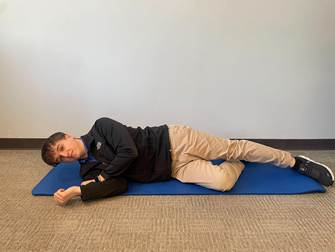
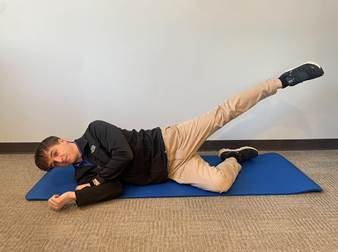
- Side Lying Hip Abduction
- Laying on your side, lift your top leg upwards while keeping your knee and hip straight. Make sure your hips stay stacked over each other and do not rotate backwards/forwards. Can add ankle weights to increase challenge.
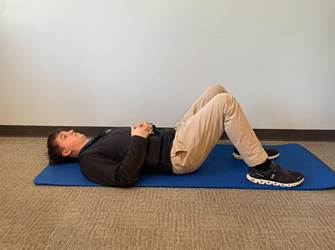
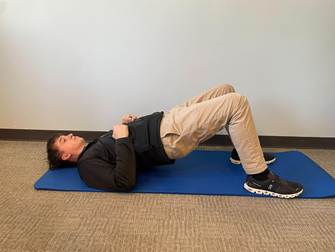
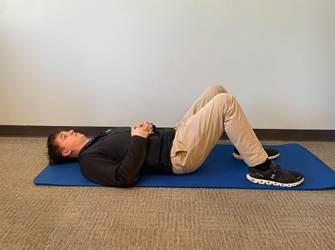
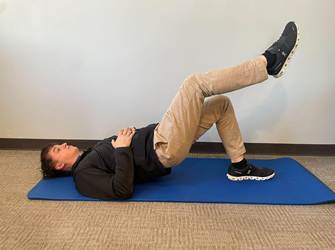
- Glute Bridge (with Progression)
- Position 1: Lay down on your back with your knees bent and your feet flat on the ground. Squeeze your glutes and your core as you lift your hips towards the ceiling without arching your back. Hold for 2 seconds before slowly lowering.
- Progression: Perform single leg
Advanced Exercises
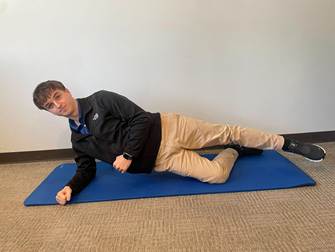
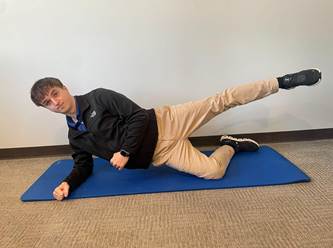
- Side Plank Hip Abduction
- Lay on your side keeping shoulders, hips, knees, and ankles in line. Bend bottom knee while keeping the top leg straight and then to rise to plank position. Wile in side plank, raise the top leg towards the ceiling, pausing briefly, and then return to neutral. Repeat
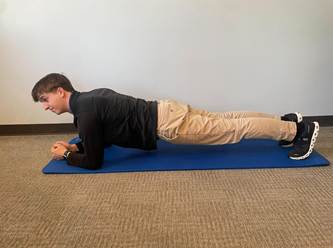
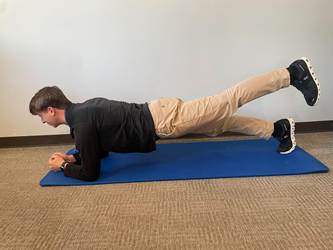
- Front Plank with Hip Extension
- Start in the standard plank position on your elbows with trunk, hips, and knees in neutral position. Lift one leg off the ground and extend your hip past neutral (bringing the heel up towards the ceiling). Perform 10 repetitions and then repeat on the opposite side.
Call one of our Fort Wayne Physical Therapy Clinics at ProTailored Physical Therapy today at (260) 739-0300 to schedule your appointment to be seen by one of our great specialists!
Reference:
- Boren K, Conrey C, Le Coguic J, Paprocki L, Voight M, Robinson TK. Electromyographic analysis of gluteus medius and gluteus maximus during rehabilitation exercises. Int J Sports Phys Ther. 2011;6(3):206-223.