
Load vs. Rest: Why Complete Rest Often Delays Recovery
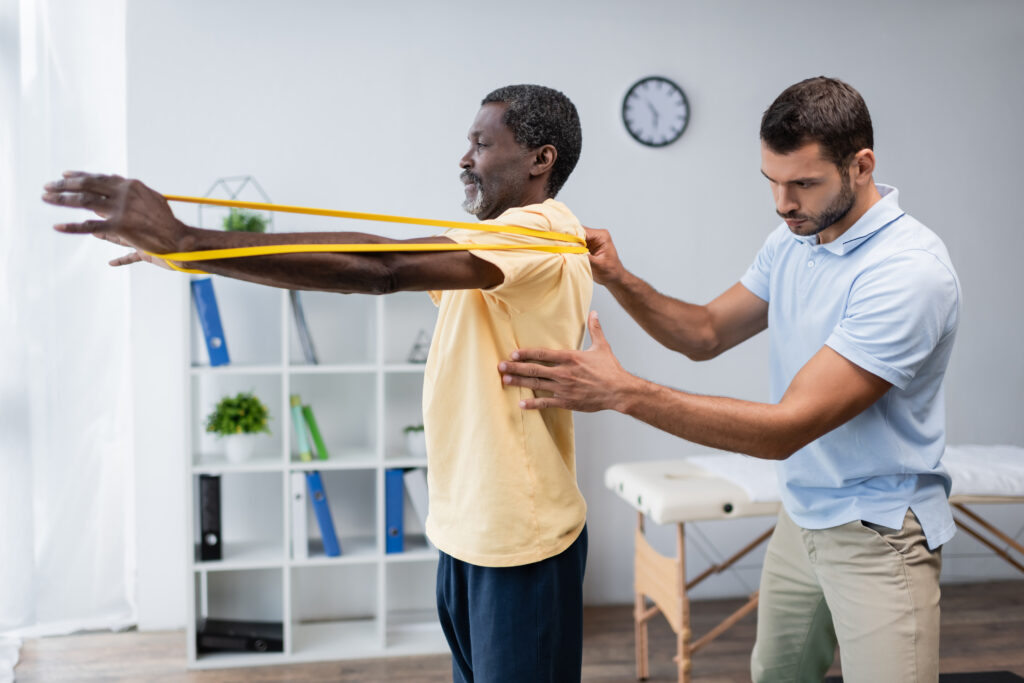
When pain develops, the natural response is often to stop activity and rest. While rest can be appropriate in the early stages of certain injuries, prolonged inactivity frequently delays recovery rather than accelerating it. For many orthopedic conditions, particularly tendon, muscle, and non-traumatic joint injuries, strategic, progressive loading is more effective than extended rest. Understanding why requires a closer look at how the body heals.
The Body Adapts to Mechanical Stress. Musculoskeletal tissues are designed to respond to load. Muscles, tendons, ligaments, and bone require mechanical stress to maintain strength and structural integrity. When appropriate stress is applied, the body adapts by:
- Increasing tissue strength
- Improving neuromuscular control
- Enhancing load tolerance
- Restoring functional capacity
- Stimulating new growth/ hypertrophy
Conversely, when stress is removed for prolonged periods:
- Strength declines
- Tendon stiffness and capacity decrease
- Joint tolerance diminishes
- Overall conditioning is reduced
- Catabolism takes over
This reduction in capacity can make a return to activity more difficult and may even increase symptom sensitivity. Studies show that even unaffected limbs are affected negatively with just a day of complete rest. Research demonstrates that musculoskeletal tissues require mechanical loading to maintain strength and structural integrity, and that even short periods of inactivity can lead to measurable declines in tissue capacity and muscle protein synthesis (Cook & Purdam, 2009; Dirks et al., 2014).
The Appropriate Role of Rest
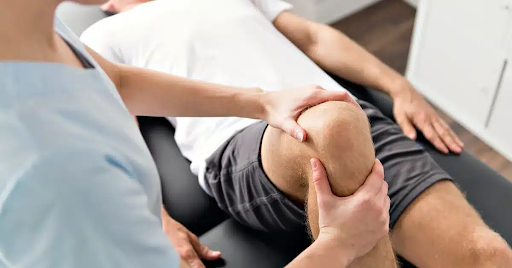
Rest is not inherently harmful. In the acute phase of injury, particularly when significant swelling, inflammation, or impaired movement patterns are present. Temporary reduction in activity may be necessary; However, this period is often shorter than many individuals assume. Extended inactivity can create a pattern in which symptoms improve temporarily but return once activity resumes. In many cases, the underlying issue is not ongoing tissue damage but insufficient capacity to tolerate load.
Strategic loading refers to the deliberate, progressive implementation of stress to injured tissues in a controlled manner. This approach leads to:
- Stimulation of tissue remodeling
- Improved mechanical strength
- Gradual restoration and tolerance to daily and athletic demands
- Reduction in fear associated with movement
This concept is supported by research showing that appropriately dosed mechanical loading stimulates tissue remodeling and is a key driver of recovery in tendinous and musculoskeletal conditions (Cook & Purdam, 2009).
Loading is carefully dosed to remain within tolerable limits. Mild, manageable discomfort during rehabilitation exercises is acceptable, provided symptoms do not significantly worsen and return to baseline within a reasonable time frame.
The Role of Physical Therapy
Determining the appropriate type, intensity, and progression of loading requires clinical judgment. A physical therapist evaluates the individual’s condition, functional demands, and current capacity in order to design a structured program that promotes recovery without aggravation. Through guided progression, movement analysis, and objective testing, physical therapy supports not only pain reduction but also the restoration of strength, resilience, and confidence. A physical therapist can also remind and encourage continuation of exercises for unaffected limbs or alternative ways to stay active! The goal is not simply symptom relief, but a return to prior level of function… or higher.
While rest has a limited role in early injury management, prolonged inactivity often delays meaningful recovery. The musculoskeletal system adapts to appropriate stress, and strategic loading is essential for restoring function!
How Can ProTailored Help?
At ProTailored, rehabilitation is not approached as a generic protocol or a passive experience. Each plan of care is built around the individual; your injury, your goals, your background, and the demands you are trying to return to.
Our focus is not simply on reducing pain. It is on restoring capacity.
This means:
- Identifying strength deficits and movement inefficiencies
- Progressively loading tissues to rebuild tolerance
- Integrating research-based principles into rehabilitation
- Using objective measures to guide progression
- Supplementing with manual therapies to promote healing and decrease adverse events
Whether you are a competitive athlete or a driven adult who values staying active, ProTailored is designed to bridge the gap between traditional rehabilitation and tailored techniques. The goal is not just to get you out of pain, but to help you return to your prior level of function stronger, more resilient, and confident in your body.
If you’re experiencing symptoms, ProTailored Physical Therapy can help! Call us at (260) 739-0300 to schedule your consultation and take the first step toward relief.
References
Cook, J. L., & Purdam, C. R. (2009). Is tendon pathology a continuum? A pathology model to explain the clinical presentation of load-induced tendinopathy. British Journal of Sports Medicine, 43(6), 409–416. https://doi.org/10.1136/bjsm.2008.051193
Dirks, M. L., Wall, B. T., van de Valk, B., Holloway, T. M., Holloway, G. P., Chabowski, A., Goossens, G. H., & van Loon, L. J. C. (2014). Short-term muscle disuse lowers myofibrillar protein synthesis rates and induces muscle atrophy in healthy young men. The Journal of Physiology, 592(1), 187–198. https://doi.org/10.1113/jphysiol.2013.266635