
AC Joint Separation: Why This Shoulder Injury Requires Patience
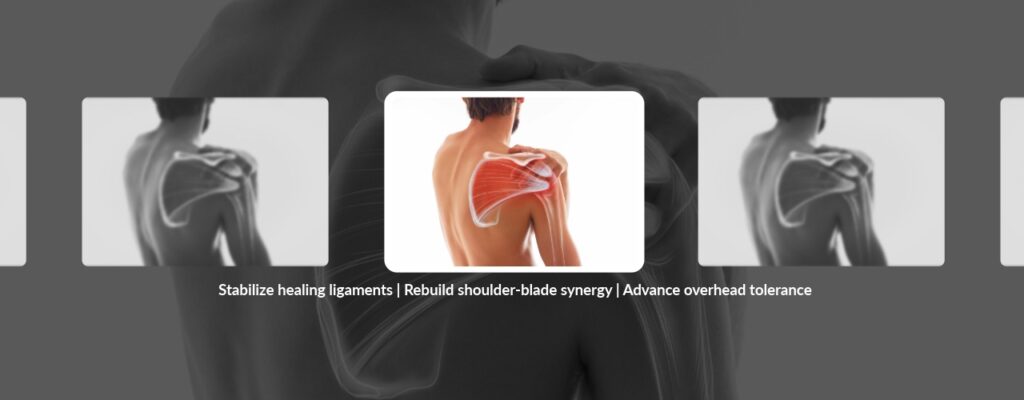
A hard fall onto your shoulder can leave you with more than a bruise. If the ligaments supporting the top of the shoulder are injured, you may have an acromioclavicular, or AC, joint separation. Understanding AC joint injury recovery starts with knowing how severe the separation is, because different grades can require very different approaches to healing.
The good news is that many AC joint separations respond well to nonsurgical care from the Protailored Physical Therapy team. Even so, recovery takes time. The injured ligaments need a chance to heal, while rehabilitation gradually restores comfortable movement, strength, and confidence.
What Happens When the AC Joint Separates?
The AC joint is where the collarbone, or clavicle, meets the acromion, a part of the shoulder blade. Ligaments help hold this small joint together.
An AC joint separation usually happens when a force pushes the shoulder downward, often during a fall or collision. Depending on the amount of ligament damage and displacement, the injury is classified from Grade I through Grade VI.
Common symptoms include:
- Pain and tenderness at the top of the shoulder
- Swelling around the AC joint
- Pain when lifting or reaching across the body
- Difficulty sleeping on the injured side
- Weakness or discomfort with daily activities
- A visible bump at the top of the shoulder with more significant injuries
The grade helps your healthcare team determine the appropriate AC joint injury recovery plan.
An Overview of AC Joint Recovery Grades
Grade I: A Sprain That Still Deserves Time
A Grade I separation is the mildest form. The AC ligament is sprained, but the joint remains stable with no significant displacement.
Treatment is usually conservative. Early care may include temporarily modifying painful activities and using strategies to manage discomfort. Physical therapy can then help restore comfortable shoulder motion and gradually rebuild strength. As symptoms settle, treatment may progress toward:
- Shoulder and shoulder blade mobility
- Rotator cuff strengthening
- Scapular muscle strengthening
- Gradual return to lifting, work, or sports
Although this injury is considered mild, rushing back into demanding activity can irritate the healing joint.
Grade II: More Ligament Damage Means a Slower Build
With a Grade II injury, the AC ligament is torn, and the coracoclavicular ligaments, which provide additional support to the collarbone, are sprained or partially injured. A small bump may become noticeable.
Most Grade II injuries are still managed without surgery. However, AC joint injury recovery may take longer because the supporting tissues have sustained greater damage.
Physical therapy typically progresses according to symptoms and function. Your therapist may work on restoring your range of motion before gradually increasing resistance and overhead demands. Athletes and people with physically demanding jobs may also need progressive training that prepares the shoulder for pushing, pulling, carrying, or contact.
Grade III: When Treatment Becomes More Individualized
A Grade III separation involves complete disruption of the AC and coracoclavicular ligaments. The collarbone becomes more displaced, which can create a noticeable bump.
Many Grade III injuries can still be treated without surgery. The best approach, however, may depend on factors such as symptoms, functional demands, sport or occupation, and the shoulder’s response to rehabilitation.
Physical therapy may focus on:
- Regaining functional shoulder mobility
- Building rotator cuff and shoulder blade strength
- Improving control during reaching and lifting
- Gradually restoring load tolerance
- Preparing for specific work or athletic demands
A visible bump can remain even when the shoulder functions well. Treatment is therefore guided by more than appearance. Comfort, strength, stability, and the ability to perform meaningful activities all matter.
Grades IV Through VI: When Specialist Care Takes Priority
Grades IV, V, and VI are more severe injuries involving substantial displacement of the collarbone. These injuries are less common and generally require evaluation by an orthopedic specialist. Surgical management is more frequently considered.
If surgery is recommended, rehabilitation becomes an important part of the recovery process. Early rehabilitation follows the surgeon’s precautions to protect healing tissues. Over time, therapy progresses toward restoring mobility, strength, control, and functional use of the arm.
Occupational therapy may also play an important role in AC joint injury recovery when the injury makes everyday tasks difficult. An occupational therapist can help you safely return to activities such as dressing, bathing, cooking, working, and completing household tasks. Treatment may include adapting activities during recovery, improving upper-body function, and practicing the specific movements needed for greater independence at home and work.
Returning to demanding work or sports is usually based on healing and functional progress rather than simply reaching a certain point on the calendar.
Give Your Shoulder the Time and Support It Needs
An AC joint separation can be frustrating, especially when it keeps you away from work, exercise, or sports. Your injury grade provides useful information, but your symptoms, goals, and functional progress also help shape treatment.
Protailored Physical Therapy can provide personalized guidance throughout your recovery. Contact our team to learn how supportive physical therapy can help you restore shoulder movement, rebuild strength, and work toward a confident return to your regular activities.